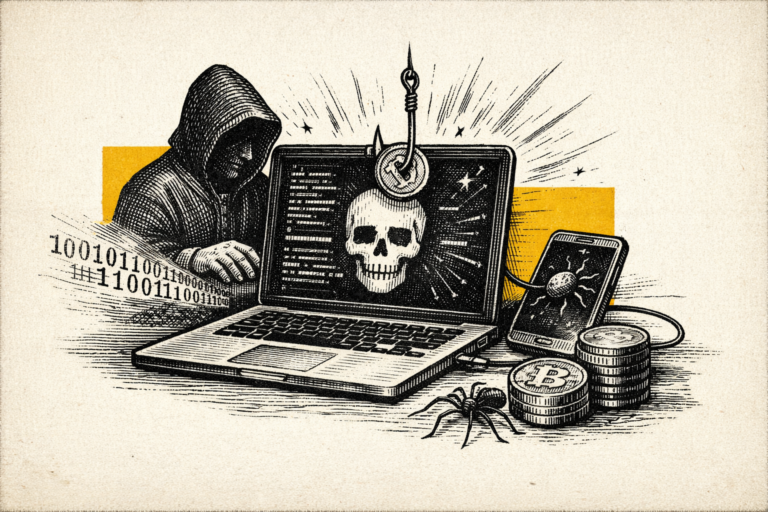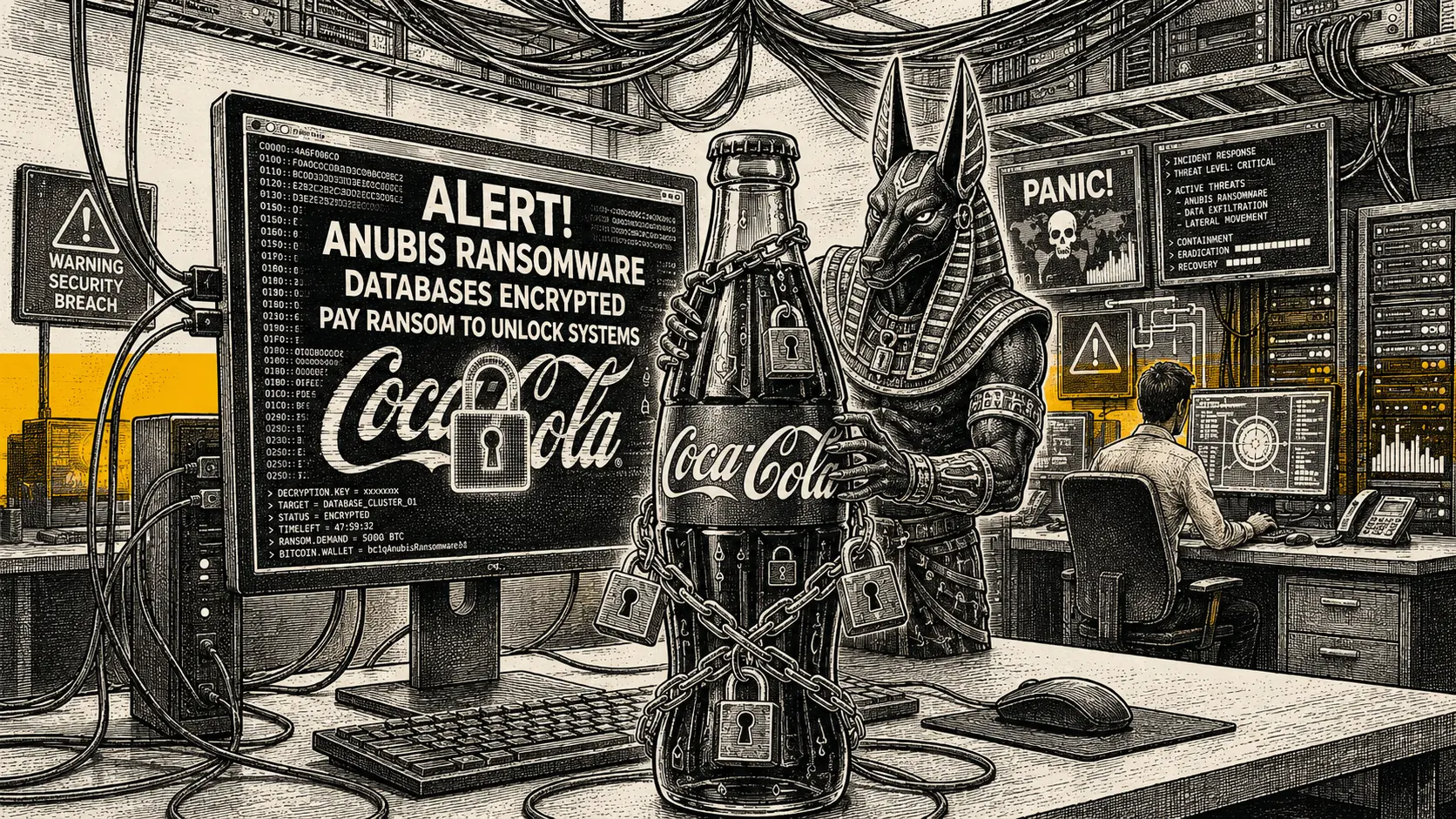
According to an official statement from Coca-Cola, Fairlife identified unauthorized third-party access to part of its systems, including production-related systems, in connection with a ransomware incident. After detecting the incident, the company activated its incident response and business continuity protocols, engaged external cybersecurity experts, and notified the relevant authorities.
What happened to Fairlife?
On the day July 16, 2026, Coca-Cola publicly announced that its subsidiary Fairlife had been affected by a ransomware incident. As a containment measure, Fairlife’s production in the United States was temporarily suspended while the company investigated the incident and worked to restore the affected systems.
Coca-Cola stated that the quality and safety of its products were not affected. It also reported that Fairlife's operations in Canada had not been affected by the incident.
This point is important because it highlights a clear distinction between operational impact and health impact. The attack affected production and operational capacity, but, according to the company, it did not compromise the safety of products already manufactured.
Who is Fairlife?
A Fairlife It is a dairy brand known for its ultrafiltered milk, protein drinks, and nutritional products. The company is headquartered in Chicago and is owned by Coca-Cola. The brand has become a significant business unit within the company’s portfolio, particularly due to the growth of the market for protein drinks and products with nutritional appeal.
Therefore, the incident should not be viewed solely as an attack on a food company. It also serves as a warning to industrial operations, supply chains, production environments, and companies that rely on digital systems to keep production lines running.
Where does the Anubis ransomware come into play?
After the incident was first reported, the ransomware group Anubis claimed responsibility for the attack on Fairlife on its dark web leak site, according to reports published by media outlets specializing in cybersecurity.
The group reportedly claimed that approximately 1 TB of confidential data. However, as of the time of this analysis, this claim should be treated with caution, as it comes from the threat actor itself and does not, in and of itself, constitute an official confirmation from the company.
It is important to make a distinction: Coca-Cola confirmed the ransomware incident, but did not publicly confirm that Anubis was responsible. Therefore, the attribution to the group should be treated as a claim by the threat actor itself and by intelligence sources, not as an official confirmation by Coca-Cola or Fairlife.
What is the Anubis ransomware?
O Anubis It is an operation of Ransomware as a Service, a model in which operators provide the infrastructure, malware, and extortion ecosystem so that affiliates can carry out attacks against organizations.
This type of operation functions as a criminal partnership model: while one group develops or maintains the ransomware, other affiliates carry out the attacks, hack into companies, negotiate ransoms, and share a portion of the proceeds.
Anubis stands out for combining three dangerous elements:
- File encryption: locking the victim's data to demand a ransom;
- Extortion through data leaks: threat of public disclosure of sensitive information;
- Destructive power: the use of tools that can damage or destroy files, making recovery difficult.
This third characteristic makes Anubis particularly aggressive. In traditional ransomware attacks, the criminals“ demand is usually: ”Pay to decrypt your files.” In attacks with destructive capabilities, the risk is even greater, as files can be irreversibly damaged.
Why is this attack significant?
The Fairlife case shows that ransomware is no longer just a problem of “locked files.” It has become a real risk to the operational continuity of industrial companies.
When an attack affects production-related systems, the company must make quick decisions: keep operations running at the risk of the attack spreading, or shut down critical systems to contain the incident. In Fairlife’s case, the response was to temporarily suspend production operations in the United States.
This type of shutdown can have financial, logistical, and reputational consequences. Even if product safety has not been compromised, the mere fact of suspending production already represents a significant disruption to business operations.
Timeline of the incident
July 16, 2026
Coca-Cola has issued a statement announcing that Fairlife has detected unauthorized access to its systems, including those related to production, in connection with a ransomware incident. Production in the United States has been temporarily suspended.
July 17, 2026
Media outlets and specialized websites are reporting on the case, emphasizing that production in the U.S. has been paused, that the quality and safety of the products have not been affected, and that Canadian operations have not been impacted.
July 20, 2026
Intelligence platforms are now listing Fairlife/Coca-Cola as a victim claimed by the Anubis group.
July 21, 2026
Specialized news reports indicate that the Anubis group claimed responsibility for the attack and threatened to leak data that was allegedly exfiltrated.
What is still unknown?
Despite the publicly available information, there are important details that have not yet been confirmed.
It is not officially known what the initial vector of the attack was. Nor has it been confirmed whether any data was actually stolen, what data may have been accessed, whether credentials were compromised, whether industrial systems were directly affected, or whether the shutdown was carried out as a precaution.
Coca-Cola itself reported that the investigation was still ongoing and that the scope, nature, and impacts of the incident were not yet fully known.
This is common in ransomware incidents. In the early days, the company’s priority is usually to contain the attack, preserve evidence, restore systems, protect critical operations, and communicate only what is strictly necessary in a legally sound manner.
Why are industrial settings attractive targets?
Industrial and food companies are attractive targets for criminals because they rely heavily on availability. Unlike a traditional office, where part of the operation can be temporarily manual, a modern production line relies on integrated systems, sensors, automation, ERP, inventory control, logistics, quality control, suppliers, and distribution.
When these operations come to a halt, the impact is felt quickly. There is a risk of lost production, delayed deliveries, stockouts, financial losses, and public pressure.
For ransomware groups, this sense of urgency increases their leverage. The more critical the operation, the greater the pressure on the company to respond quickly to the crisis.
The Fairlife case underscores that cybersecurity in industrial environments must focus on IT e OT as interconnected parts of the same risk. It is not enough to simply protect laptops, emails, and corporate servers. We need to understand the systems that support production.
Key Lessons from the Attack
1. Business continuity must be tested before an incident occurs
Having a business continuity plan on paper is not enough. Companies need to simulate scenarios involving ransomware, downtime of production systems, loss of communication with suppliers, and emergency recovery.
2. Backups should not be treated as a secondary control
In attacks involving groups that combine encryption, extortion, and destructive capabilities, companies need to have copies that are protected, segregated, immutable, and regularly tested.
3. Network segmentation is critical
Office systems, administrative servers, production environments, quality systems, and external integrations should not operate as a single, flat surface. The less segmented the environment, the greater the likelihood of lateral movement.
4. Early detection changes the extent of the damage
Logs, EDR, XDR, SIEM, identity monitoring, anomalous behavior alerts, and 24×7 response can reduce the time between a breach, detection, and containment.
5. Crisis communication is part of security
Coca-Cola reported the incident to the market, stated that it had called in experts and authorities, and distinguished between the operational impact and product safety. This type of communication is essential for reducing speculation and maintaining trust.
Recommended Controls for Businesses
Companies that wish to reduce the risk of similar attacks should prioritize technical, operational, and governance controls. These include:
- Updated inventory of IT and OT assets;
- Segmentation between the corporate network and the production environment;
- MFA for administrative access, VPNs, cloud consoles, and critical systems;
- Vulnerability management, with priority given to systems exposed to the Internet;
- Immutable, offline, or segregated backups;
- Frequent restoration tests;
- Monitoring for anomalous behavior on endpoints and servers;
- Incident response plan with defined roles;
- Ransomware simulations involving legal, communications, IT, security, and operations;
- Review of privileged access and service accounts;
- Supplier management and API integrations;
- Specific playbooks for production shutdowns.
What does this case teach senior management?
The attack on Fairlife also serves as an important warning to boards, management, and executives. Ransomware should not be treated solely as a technical threat. It needs to be addressed as a corporate risk.
A company may have good products, a strong brand, and a global presence, but it can still suffer significant consequences if its critical systems are disrupted. That is why questions like the ones below need to be on the executive agenda:
- Which business processes would be disrupted if the systems were encrypted?
- How long can the company operate without its core systems?
- Are the backups actually restorable?
- Is there an adequate separation between administrative and production areas?
- Who decides to shut down a plant, a production line, or a critical system?
- Has the company ever conducted a ransomware simulation involving senior management?
These questions show that cybersecurity is not just an IT function. It involves business continuity, legal affairs, communications, operations, vendors, compliance, and risk management.
Conclusion
The ransomware attack on Fairlife illustrates how cyber incidents can quickly spill over from the digital world and affect a company’s physical operations. In the case of the Coca-Cola subsidiary, the most visible public impact was the temporary suspension of production in the United States.
The claim by the Anubis group adds another layer of concern, particularly because the group is associated with double extortion and destructive tactics. Still, the attribution to Anubis should be treated with caution until there is official confirmation or more conclusive public technical evidence.
The key takeaway is clear: ransomware isn't just an IT problem. It poses a risk to business continuity, production, reputation, the supply chain, and governance.
Companies that rely on digital environments to operate must treat cybersecurity as an essential part of their operational resilience.
Frequently Asked Questions on This Topic
What is ransomware, and how does it work?
Ransomware is a type of malware that encrypts a victim's data and demands payment in exchange for unlocking the information. It typically spreads through phishing emails or software vulnerabilities, and once installed, it can spread rapidly across a network, making it difficult to recover the data without paying the ransom.
How did Coca-Cola handle the ransomware attack?
Following the attack, Coca-Cola implemented an incident response plan, which included containing the attack, restoring data from backups, and communicating with the authorities. The company also reviewed its security policies and invested in preventive technologies to avoid future incidents.
What are the best practices for protecting a company against ransomware?
Best practices include regular employee training, maintaining regular backups, software updates, implementing advanced security solutions, and network segmentation. In addition, having a well-structured incident response plan is crucial for minimizing damage in the event of an attack.
What is the impact of a ransomware attack on a company's reputation?
A ransomware attack can cause significant damage to a company’s reputation, leading to a loss of trust among customers and partners, as well as potential financial and legal repercussions. Transparency in communicating about the incident and the corrective measures taken is essential to mitigating these effects.
Is it safe to pay the ransom in a ransomware attack?
Paying the ransom does not guarantee that the data will be recovered, and it also encourages criminal activity. The recommendation is not to pay and to seek assistance from cybersecurity professionals to try to recover the data through alternative means.
What are the signs of a ransomware attack?
Signs of a ransomware attack include being unable to access files, ransom messages appearing on the screen, and unusual network activity, such as an increase in data traffic or unauthorized access to systems. It is crucial to proactively monitor the network to detect these threats quickly.
What should you do immediately after a ransomware attack?
Immediately after an attack, the organization must contain the threat by disconnecting affected systems from the network. Next, it must notify the appropriate authorities and consult with cybersecurity experts to conduct a forensic analysis and restore the systems from backups.
Cybersecurity is an essential investment for protecting corporate assets and your company’s reputation. At El Canary, we offer customized solutions tailored to your organization’s specific needs, helping to mitigate risks and strengthen your security posture. Contact us to learn more about how we can help your company protect itself against emerging threats.
References
- The Coca-Cola Company — Technological Disruption Affecting Fairlife Operations
- Reuters — Coca-Cola says Fairlife halts U.S. production following a cyberattack
- Associated Press — Fairlife Halts U.S. Production Following a Cyberattack
- Cyber Daily — Anubis Ransomware Claims Responsibility for the Coca-Cola Fairlife Hack
- SOCRadar — Fairlife / Coca-Cola listed as a victim of the Anubis ransomware
- SEC — Coca-Cola Form 8-K Filing