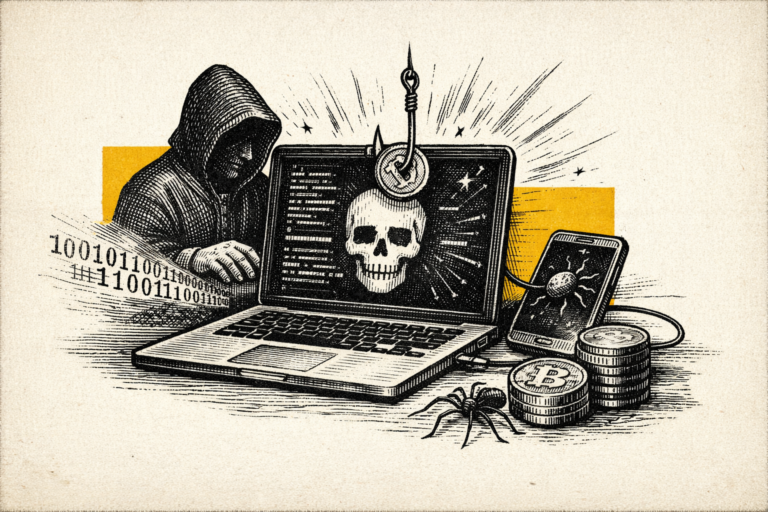
The security of marketing links has become one of the most critical frontiers in brand protection in the digital environment. SMS and WhatsApp have established themselves as primary channels for customer engagement, but the very efficiency that makes them attractive for campaigns also exposes them to criminals who use smishing (phishing via SMS) and social engineering to commit fraud on behalf of legitimate companies.
The impact isn't just financial. When a consumer receives a fraudulent message bearing your company's branding, the loss of trust is immediate and long-lasting. Protecting your links today means protecting your brand's accumulated value.

Why Marketing Link Security Has Become a Brand Imperative
The growth of mobile marketing has created an attack surface that few communications departments monitor closely enough. While the IT team safeguards the corporate perimeter, links from SMS and WhatsApp campaigns circulate outside that control, reaching thousands of consumers on personal devices that lack corporate protection.
Smishing attacks rely on two key mechanisms: artificial urgency and transferred trust. The criminal does not need to build credibility from scratch. Instead, they borrow yours by replicating the brand’s identity to prompt the victim to take immediate action without critical reflection.
According to the Phishing Guide from CISA, the NSA, and the FBI, smishing and phishing follow the same attack cycle, with the difference that the mobile channel further reduces the user's evaluation time. On a cell phone, the attention span is shorter, and users are more likely to click before verifying.
The three most common tactics used in fraudulent campaigns that impersonate brands:
Sender spoofing: Criminals use spoofing techniques to display the company name instead of the actual sender's number. The victim sees “Bank X” or “Brand Y” in the sender field, but this does not indicate the message’s legitimate origin.
Links with shortened URLs: Generic URL shorteners hide the actual destination before the user clicks. The displayed URL does not allow the user to determine whether the domain is legitimate before being redirected to a phishing page that mimics the brand's visual identity.
Emergency social engineering: Messages such as “Your account will be blocked in 24 hours” or “You have been selected for an exclusive benefit” bypass the verification process by prompting immediate action. The CIS Security Spotlight on Smishing identifies urgency as the main psychological trigger for this type of attack.
The Technical Pillars of Link Protection
An effective strategy starts with the infrastructure, even before the campaign is created. Security needs to be built into the link, not added later.
Branded Domains: The First Sign of Trust
Using your own domains for shortening marketing URLs is the measure that has the greatest immediate impact on consumers' perception of security. When the displayed link contains the brand name, such as go.minhaempresa.com.br/oferta, the user can check the source before clicking.
Generic URL shorteners such as bit.ly, TinyURL and similar services do not offer this level of transparency. Any criminal can create a link that looks identical to yours using the same services. A branded domain eliminates this risk by making imitation technically more difficult and visually detectable.
HTTPS and SSL Certificates
The presence of the HTTPS protocol does not guarantee that a website is legitimate, but its absence is a clear red flag. Modern browsers display active warnings for websites without a valid certificate. Every campaign URL must use HTTPS with an up-to-date SSL certificate, and this includes intermediate redirects.
Chained redirects
Each additional redirect in a URL is an opportunity for manipulation. Criminals exploit long chains of redirects to conceal the final destination, passing through legitimate domains before reaching the malicious page. The best practice is to minimize the number of hops between the URL sent to the consumer and the campaign’s final destination.
Continuous monitoring: defense beyond delivery
Protection doesn't end when the campaign launches. Actively monitoring your brand's identity on external domains is an essential part of any link security strategy.
| Practice | Objective |
|---|---|
| Domain Monitoring | Identify registrations of phonetic and visual variations of the trademark (typosquatting) before they are used in fraudulent campaigns |
| Official Channel Verification | Ensure that the company's WhatsApp Business account has the green verified badge, thereby reducing the effectiveness of impersonation attacks |
| Customer Base Education | Proactively communicate that the company does not send password recovery or account update links through unsolicited channels |
| Reports of Domain Abuse | Monitor domain registration platforms and threat intelligence services to identify new registrations that imitate the brand |
Typosquatting warrants special attention in high-volume campaigns. When a company launches an SMS campaign to 500,000 customers, criminals monitor domain registrations and may create fraudulent variations within hours of the launch, exploiting the same campaign context to deceive consumers who received the legitimate message.
Governance and Incident Response
The speed of response determines the extent of the reputational damage. A protocol that is not yet in place costs more than any investment in prevention.
Proactive communication: When a fraudulent campaign using the brand’s identity is detected, alerting the customer base should be the first step, not the last. An official announcement through the company’s verified channels mitigates some of the impact by signaling that the company is aware of and in control of the situation.
Accessible reporting channels: Consumers who receive suspicious messages need a simple way to report them. An abuse email, an in-app button, or a dedicated phone number can reduce the time it takes to detect active malicious campaigns.
Technical and legal actions: In cases of recurring abuse, working together with telecommunications carriers, messaging platforms, and hosting providers is the way to take down malicious URLs. According to guidance from the FBI and CISA, formal reporting to organizations such as the IC3 is part of the mitigation process and can speed up the removal of fraudulent pages.
From Prevention to Resilience
Marketing link security is not a project with a set completion date. It is an ongoing process that combines technical infrastructure, brand monitoring, and consumer education.
Companies that adopt branded domains, actively monitor domain variations, and maintain clear incident response protocols build a security posture that protects both consumers and the brand value built up over time.
The mobile channel will not lose its relevance. Nor will the risk. The difference between brands that suffer severe reputational damage from smishing attacks and those that quickly contain the damage lies in foresight and the response framework put in place before the incident occurs.
Would you like to learn how El Canary® can protect your company's digital assets against social engineering and brand identity attacks? Learn about the EC Operations and talk to an expert.