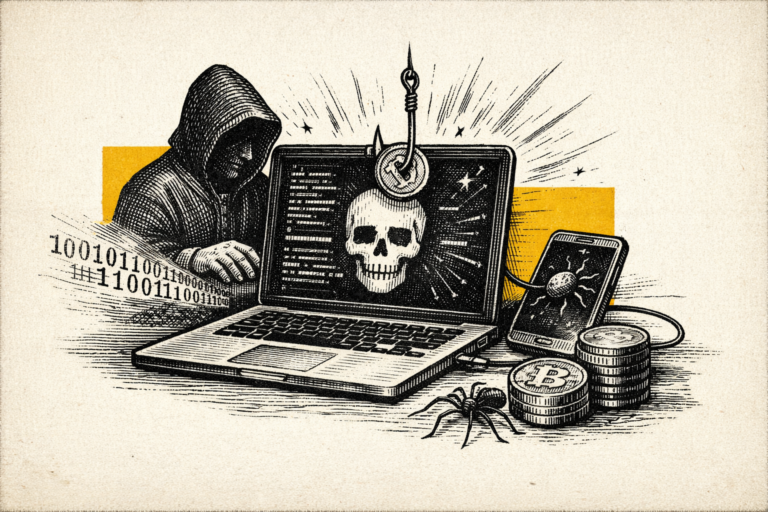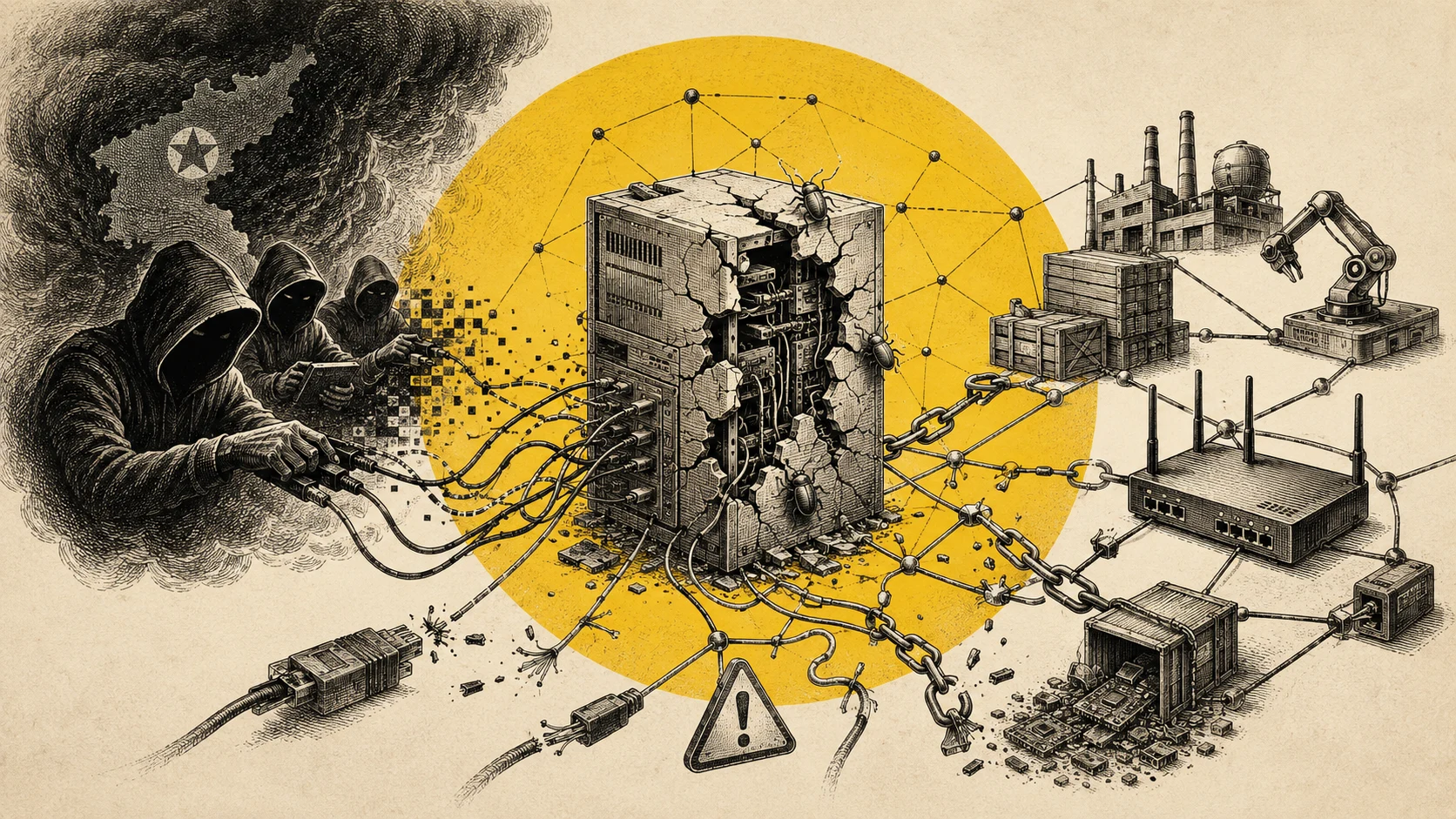
Cyberattacks involving North Korean hackers and vendor vulnerabilities are no longer a topic limited to technical teams; they have now made their way onto the agendas of boards of directors, executive management, legal, compliance, audit, and business units. The reason is simple: modern organizations rely on third-party software, open-source libraries, cloud providers, SaaS platforms, API integrations, consulting firms, logistics partners, payment gateways, development tools, and countless external components to operate. This dependence drives efficiency, scale, and innovation, but it also increases the attack surface.
Recently, cybersecurity has been shaken by a series of attacks linking North Korean hackers to vulnerabilities in supply chains, including the use of NPM packages. These incidents clearly illustrate how modern cybersecurity faces complex challenges that go beyond direct attacks on corporate systems. When a seemingly trustworthy component is compromised—such as a software library, a development dependency, or a vendor with privileged access—the attack can reach the company’s environment without going through traditional intrusion vectors.
In this context, understanding cyberattacks from the perspective of the digital supply chain is essential for any organization that wishes to protect data, ensure business continuity, comply with the LGPD, advance its security maturity, and reduce third-party risks. The problem lies not only in “being attacked,” but in not knowing which suppliers, software, dependencies, credentials, and integrations could become entry points for sophisticated threats, including operations associated with state-sponsored groups.
Table of Contents
- Conceptual Explanation of Cyberattacks and the Supply Chain
- Importance for Businesses
- Key risks, challenges, or problems
- Best Practices for Implementation
- Practical examples
- Governance Recommendations
- Technical or operational recommendations
- Evidence demonstrating compliance or maturity
- Frequently Asked Questions on This Topic
Conceptual Explanation of Cyberattacks and the Supply Chain
The concept of a digital supply chain refers to the interdependence among companies, suppliers, partners, tools, libraries, platforms, and technology services that support an operation. In a typical organization, internal systems consume external APIs, applications use open-source dependencies, development teams install packages in automated pipelines, business units subscribe to SaaS solutions, and vendors provide services with some level of access to corporate data, systems, or environments.
This interdependence means that a vulnerability in a single element can compromise the entire network. A malicious package published in a public repository, a vendor account without multi-factor authentication, a vulnerable plugin, management software with an exploitable flaw, or an exposed API key can pave the way for high-impact cyberattacks. The attacker does not necessarily need to breach the company’s “front door”; often, it is enough to exploit an existing relationship of trust.
North Korean hackers, often linked to sophisticated, state-sponsored operations, have been cited in public investigations into campaigns focused on espionage, financial theft, crypto asset theft, compromising developers, and exploiting software supply chains. Attributing cyberattacks to specific states or groups should be approached with caution, as it depends on technical evidence, threat intelligence, and contextual analysis. Nevertheless, the pattern observed across various campaigns demonstrates the growing interest of advanced groups in development environments, technology providers, and vendors with privileged access.
The tools used in these attacks—such as NPM packages, Python libraries, IDE extensions, container images, automation scripts, and open-source dependencies—are often integrated into software development processes. This makes them attractive targets. A seemingly legitimate package can execute malicious code during installation, capture tokens, steal environment variables, search for credentials in local files, or establish communication with infrastructure controlled by the attacker.
This attack vector exposes a vulnerability that many organizations underestimate. By focusing solely on protecting their own networks, firewalls, endpoints, and servers, companies may neglect the security of their vendors, code repositories, CI/CD pipelines, SaaS tools, and software dependencies. Modern information security must take into account both internal assets and external relationships, as the traditional perimeter has dissolved.
How Cyberattacks Exploit Suppliers and Dependencies
Cyberattacks against supply chains typically exploit trust. An application trusts a library. A company trusts a supplier. A pipeline trusts a repository. A user trusts a software update. An administrator trusts a remote access tool. When that trust is not accompanied by security controls, monitoring, validation, and governance, it becomes a risk.
There are several forms of compromise. In typosquatting attacks, the attacker publishes a package with a name similar to that of a popular library, hoping that developers will make typos. In dependency confusion, the attacker exploits conflicts between internal and public packages to trick corporate environments into downloading a malicious version from an external repository. In maintainer compromise, the credentials of a legitimate package maintainer are stolen and used to distribute malicious code. In attacks against vendors, the attacker compromises a third-party company to gain access to its customers.
The intersection between cybersecurity and corporate governance becomes evident when we consider the responsibility that companies have for the information security of their partners. Implementing robust risk management, compliance, and data protection practices is essential to mitigating these risks, supported by recognized frameworks such as CIS Controls, NIST Cybersecurity Framework, ISO 27001, and privacy standards such as the LGPD.
Difference Between Supplier Risk and Software Risk
Although they are related, supplier risk and software risk are not the same. Supplier risk involves exposure arising from a contractual or operational relationship with third parties. It includes access to personal data, infrastructure, networks, critical systems, confidential information, financial processes, and regulated activities. Software risk, on the other hand, involves vulnerabilities, dependencies, configuration errors, malicious code, lack of updates, abandoned libraries, and components without traceability.
In practice, these two risks go hand in hand. A technology vendor may deliver vulnerable software. A development consulting firm may use malicious NPM packages. A SaaS platform may suffer a security incident and expose personal data. An integrator may maintain administrative credentials without adequate controls. For this reason, third-party management must collaborate with DevSecOps, architecture, cloud security, privacy, legal, procurement, and audit teams.
| Element of the digital chain | Example of a risk | Recommended control |
|---|---|---|
| NPM packages and open-source libraries | Malicious code, an abandoned dependency, or a known vulnerability. | SCA, SBOM, internal repository, dependency review, and blocking of insecure versions. |
| SaaS Providers | Data exposure, weak configurations, excessive integrations, and accounts without MFA. | Due diligence, contractual provisions, access management, logs, and periodic assessments. |
| CI/CD Pipelines | Theft of secrets, execution of malicious scripts, and unauthorized modification of builds. | Permission segregation, artifact signing, secret scanning, and pipeline hardening. |
| Service Providers with Remote Access | Misuse of credentials, access outside of authorized hours, or lack of traceability. | PAM, MFA, just-in-time access, periodic reviews, and session monitoring. |
Importance for Businesses
Understanding the connection between North Korean hackers and vendor vulnerabilities is crucial for protecting companies’ digital infrastructure. Cyberattacks not only compromise data but can also paralyze operations, damage a company’s reputation, cause severe financial losses, and create legal obligations to notify data subjects, customers, regulators, partners, and shareholders.
In addition, the growing volume of personal and sensitive information that companies handle makes them attractive targets. Data on customers, employees, patients, students, users, suppliers, and partners may be spread across various platforms. In many cases, this data is stored not only in internal systems but also in CRM, analytics, marketing, customer service, payroll, document management, cloud storage, and third-party applications.
Compliance with regulations such as the LGPD and the security guidelines proposed by NIST, CIS Controls, and ISO 27001 are crucial steps for organizations that wish to demonstrate due diligence. The LGPD requires technical and administrative measures capable of protecting personal data against unauthorized access and accidental or unlawful incidents. ISO 27001 provides guidance on establishing a risk-based information security management system. The NIST CSF organizes capabilities into functions such as govern, identify, protect, detect, respond, and recover. CIS Controls provide practical, prioritized controls to reduce exposure.
The impacts of a security breach can be devastating, leading to fines and regulatory sanctions, as well as damage to customer trust. Therefore, it is vital that companies take a proactive approach to cybersecurity. This involves not only protecting their own networks but also continuously assessing the risks associated with their suppliers. Collaboration among IT, legal, compliance, audit, privacy, procurement, and business units is essential to ensure that all aspects of security are taken into account.
Why Senior Leadership Should Get Involved
Managing cyberattacks in the supply chain cannot be treated solely as a technical decision. It involves risk appetite, budget, supplier selection, contractual requirements, tolerance for downtime, prioritization of fixes, data governance, and accountability to customers and regulators. Senior leadership needs to understand that risk reduction depends on consistent organizational decisions, not just on purchasing tools.
When a company outsources part of its digital operations, it does not completely outsource its responsibility. If a vendor fails and personal data is exposed, the contracting organization may need to explain what criteria it used in selecting the vendor, what controls it required, what evidence it requested, how it monitored the risk, and how it responded to the incident. This reasoning is particularly relevant in contracts involving personal data processors, critical services, or privileged access.
Financial and Operational Impact
The costs of cyberattacks associated with suppliers can arise on several fronts: forensic investigation, system downtime, restoring backups, communicating with customers, legal counsel, responding to data subjects, reviewing contracts, loss of productivity, project cancellations, paying emergency specialists, fines, lawsuits, and reputational damage. In complex incidents, the indirect cost can exceed the immediate technical cost.
There is also a risk of disruption to essential processes. If an authentication platform, payment system, logistics provider, cloud-based ERP, or code repository becomes unavailable, the organization may be unable to sell, deliver, bill, develop, serve customers, or meet regulatory obligations. Therefore, supplier analysis should include business continuity, operational resilience, recovery plans, and contingency testing.
Privacy and Data Protection Policy
The protection of personal data depends on governance throughout the entire information lifecycle. If a vendor collects, stores, processes, shares, or accesses personal data on behalf of the company, it must be evaluated in light of the LGPD. This includes the purpose of processing, legal basis, data minimization, retention, security, subprocessors, international transfers, incident response, and support for fulfilling data subjects’ rights.
A security breach at a vendor can lead to a personal data incident, even if the company’s core infrastructure has not been compromised. Therefore, privacy policies and contracts must be aligned with technical controls. It is not enough to include a generic confidentiality clause; it is necessary to define verifiable obligations regarding information security, incident notification, auditing, secure disposal, encryption, segregation of environments, and access management.
Key risks, challenges, or problems
Cyberattacks related to vendor vulnerabilities expose multiple layers of risks and challenges that organizations face. Many of these issues are not apparent in superficial assessments because they are hidden in technical dependencies, outdated contracts, excessive permissions, forgotten integrations, or tools adopted without formal approval. Below, we list the main risks and challenges, with a practical perspective for managers and security professionals.
Lack of visibility
Companies often have little visibility into their suppliers’ security practices, which makes it difficult to identify potential risks. They do not know which suppliers have access to sensitive data, which ones have active credentials, which ones subcontract other services, which ones store information outside the country, or which ones maintain direct integrations with critical systems. This lack of an inventory undermines any attempt at governance.
This lack of visibility also arises in software development. Teams may use hundreds or thousands of dependencies—including transitive ones—without knowing exactly which components make it into production. A library installed directly may depend on dozens of others. If one of these dependencies is compromised, the risk can extend to the final application. Without tools for software composition analysis, SBOM, and version control, the organization operates in the dark.
Reliance on third-party technologies
The use of third-party software packages and technologies can introduce vulnerabilities that are not under the organization’s direct control. This dependency is unavoidable in modern environments, but it must be managed. The problem isn’t using open source, SaaS, or external providers; the problem is using them without criteria, without monitoring, and without a response process.
Abandoned dependencies, unmaintained packages, outdated versions, libraries with few maintainers, and projects lacking governance can pose a high risk. In some cases, a small, little-known component supports a critical feature. The risk increases when there is no process in place for updating, compatibility testing, fixing vulnerabilities, and replacing insecure components.
Privileged Access for Suppliers
Vendors are often granted administrative access for maintenance, support, integration, or deployment. If this access is not controlled, monitored, and reviewed, it can become one of the most dangerous entry points for cyberattacks. Shared accounts, static passwords, the absence of MFA, broad VPN access, permanent permissions, and a lack of session logging create conditions conducive to abuse.
In a compromise scenario, an attacker can use the vendor’s legitimate credentials to access the company’s systems. This makes detection difficult, as the activity may appear to be authorized. For this reason, controls such as PAM, just-in-time access, network segmentation, the principle of least privilege, centralized logs, and alerts for anomalous behavior are essential.
Shadow IT and Decentralized Hiring
Another challenge is procuring tools without involving security, legal, privacy, or architecture teams. Business units may adopt SaaS solutions to gain agility, but without evaluating terms of use, data location, security controls, retention policies, integrations, authentication, log export, or sub-processors. This phenomenon, known as shadow IT, creates significant blind spots.
The solution is not to stifle innovation, but to create an agile supplier evaluation process. If the formal process is slow, bureaucratic, and out of touch with business realities, departments will tend to circumvent it. Security governance must balance protection and efficiency by establishing criteria that are proportionate to the risk.
Attribution Complexity and Threat Intelligence
When cyberattacks are linked to North Korean hackers or other advanced groups, attribution typically depends on technical indicators, the infrastructure used, malware, times of operation, attack methods, targets, and similarities to previous campaigns. Companies should not base decisions solely on headlines, but rather on reliable threat intelligence that is applicable to their specific context.
The practical question should not be just “Who carried out the attack?” but “What techniques were used?”, “Which controls failed?”, “What vulnerabilities exist in our environment?”, and “How can we reduce the likelihood and impact?” Attribution can help with prioritization, but resilience depends on consistent controls.
Regulatory and Contractual Risk
Incidents involving suppliers can result in breaches of contracts, service-level agreements, industry standards, confidentiality obligations, and data protection rules. In regulated sectors—such as finance, healthcare, education, telecommunications, and critical infrastructure—the need for governance over third parties tends to be even greater.
Poorly drafted clauses make it difficult to respond to incidents. If the contract does not specify a notification deadline, an obligation to cooperate, the right to conduct audits, minimum security requirements, rules for subcontracting, and liability for costs, the organization may find, in the midst of a crisis, that it has little ability to demand information from the supplier.
| Risk | Likely consequence | Warning sign |
|---|---|---|
| Supplier without a safety assessment | Insecure data handling and contractual exposure. | Contracts approved without a security or privacy review. |
| Unmanaged open-source dependencies | Vulnerable or malicious code in enterprise applications. | Lack of SCA, SBOM, and an update policy. |
| Excessive credentials | Lateral movement, data modification, and persistence. | Shared accounts, without MFA and without periodic review. |
| Contracts Without Contingency Clauses | Slow response, lack of cooperation, and uncertainty regarding responsibilities. | No notification deadline and right to audit. |
Best Practices for Implementation
Reducing exposure to cyberattacks from suppliers requires an integrated approach. It is not enough to simply create a security questionnaire and file it away. Nor is it enough to install a dependency scanning tool. This issue requires processes, people, technology, governance, metrics, and continuous improvement. The following are best practices applicable to organizations of different sizes and maturity levels.
1. Create an inventory of suppliers and critical dependencies
The first step is to identify who the vendors are, what services they provide, what data they access, what systems they integrate with, what privilege levels they have, and what impact their unavailability would cause. This inventory must be dynamic, up-to-date, and linked to procurement, legal, finance, IT, privacy, and business units.
In software development, the inventory should include libraries, packages, frameworks, container images, external APIs, build tools, and embedded components. Creating an SBOM, or Software Bill of Materials, helps document the components used in applications. This artifact is especially useful when a critical vulnerability is disclosed and the company needs to respond quickly to determine whether or not it is exposed.
2. Rank suppliers by risk
Not every vendor requires the same level of assessment. A landscaping company should not be treated the same as a cloud provider that stores sensitive personal data. Risk-based classification makes the process more efficient. Common criteria include the type of data handled, operational criticality, system access, internet exposure, data volume, location, subcontracting, security maturity, and financial impact.
Critical suppliers must undergo more in-depth due diligence, including questionnaires, supporting documentation, certifications, audit results, security tests, policies, business continuity reports, incident history, and legal review. Low-risk suppliers may follow a simplified process, provided there are clear criteria.
3. Integrate security into the procurement cycle
The security assessment should take place before the contract is signed, not after. Once the contract has been signed and the tool is already in use, there is less leverage to demand changes. The ideal process involves procurement, legal, information security, privacy, architecture, and the requesting department from the selection phase onward.
Contractual clauses must provide for minimum security requirements, incident reporting, confidentiality, data protection, subcontracting, data location, deletion upon contract termination, the right to audit, obligations to cooperate, and periodic reporting. In contracts involving the processing of personal data, it is also important to define the roles of the data controller and data processor, as well as their responsibilities and documented procedures.
4. Adopt DevSecOps and software security
When cyberattacks exploit NPM packages and dependencies, the response must incorporate DevSecOps practices. This means embedding security controls into the development workflow, from code writing through to production deployment. Software composition analysis, secret scanning, SAST, DAST, permission reviews in the pipeline, artifact signing, and image validation are examples of relevant controls.
A DevSecOps program should not be viewed as an obstacle for developers, but rather as a way to reduce rework and prevent incidents. To gain a deeper understanding of the underlying concepts, it’s worth reviewing the content on What is DevSecOps?, especially when the organization seeks to integrate security, development, and operations in a practical way.
5. Use recognized frameworks as a reference
Frameworks help organize priorities and demonstrate due diligence. ISO 27001 provides a framework for an information security management system, focusing on risk assessment, controls, internal auditing, and continuous improvement. ISO 27002 details security controls. ISO 27005 supports the risk management process. The NIST CSF provides an executive framework for governing, identifying, protecting, detecting, responding, and recovering. The CIS Controls present practical, prioritized safeguards.
Start-up companies can use the CIS Controls as an objective guide to essential measures. Content on What are the CIS Controls? It can help teams understand how prioritized controls support risk reduction in real-world environments.
6. Continuously monitor critical suppliers
Evaluating vendors only at the time of contracting is insufficient. A third-party company’s security posture can change over time. It may change its infrastructure, hire subcontractors, experience incidents, downsize its staff, alter controls, launch new integrations, or fail to update its systems. For this reason, critical suppliers must be monitored on an ongoing or periodic basis.
Monitoring may include annual reviews, updating questionnaires, requesting evidence, tracking incident reports, analyzing external exposure, reviewing access rights, conducting continuity tests, reassessing risks, and conducting audits when warranted. The frequency of these activities should be proportional to the risk.
7. Prepare a response to incidents involving third parties
Incident response plans must anticipate scenarios involving vendors. Who notifies the vendor? What is the contractual response time? How do we preserve evidence? Who decides to disconnect an integration? How do we assess the impact on personal data? How do we notify customers? How do we involve legal, privacy, communications, and senior leadership? These questions must be answered before a crisis occurs.
Crisis simulations and tabletop exercises are useful for testing roles, decision-making workflows, and dependencies. The goal is to avoid having to improvise. Real-world incidents, such as ransomware, credential exploitation, and vendor compromises, show that coordination across departments is just as important as technology. For context on the impacts of sophisticated attacks, see the article on Cybersecurity and the Impact of Ransomware illustrates how incidents can affect large organizations and chains of trust.
Practical examples
Examples help turn concepts into concrete decisions. The following presents plausible scenarios involving cyberattacks related to suppliers, libraries, access, and governance failures. The examples are not specific to any particular technology; they illustrate patterns that can occur in companies across different industries.
Example 1: Malicious NPM package in a development pipeline
A development team installs an NPM package to speed up the creation of a feature. The package name is very similar to that of a well-known library, but there is a slight difference. During installation, the package runs a script that searches for environment variables, access tokens, and API keys in the developer’s environment. It then sends this information to an external server.
Using the stolen credentials, the attacker accesses private repositories, identifies source code, collects additional secrets, and attempts to alter the CI/CD pipeline. If the company lacks secret scanning, MFA, permission segregation, and dependency review, the attack can quickly escalate to compromising applications in production.
Controls that would reduce risk include using an internal package repository, blocking the automatic execution of scripts whenever possible, SCA, package reputation analysis, review of new dependencies, secret rotation, least-privilege token permissions, and monitoring for anomalous activity in repositories.
Example 2: SaaS provider with an insecure configuration
A marketing department contracts a SaaS platform to manage campaigns and imports a database containing customer data. The tool allows integration with various applications but does not require MFA by default. An employee reuses a corporate password that was previously exposed in a data breach. The attacker gains access to the account, exports contact lists, and sets up integrations to maintain persistent access.
Although the incident occurs on an external platform, the contracting company must assess its impact under the LGPD, communicate internally, contact the vendor, review logs, identify affected data, consider notifying the National Data Protection Authority, and provide guidance to data subjects, if applicable. The fact that the system is SaaS does not eliminate governance responsibility.
Best practices include SSO with MFA, permission reviews, prior approval of tools, privacy assessments, contractual clauses, exportable logs, integration management, and user offboarding processes.
Example 3: Support Provider with Privileged Access
A technical support provider has a VPN with broad access to the corporate environment for server maintenance. The account is shared among several of the provider’s technicians and does not have multi-factor authentication. One of the technicians falls victim to a phishing attack, and the credentials are used by an attacker to gain access to the contracting company’s network.
Because the access appears legitimate, detection is delayed. The attacker conducts reconnaissance, identifies file servers, attempts to escalate privileges, and installs lateral movement tools. The incident could be mitigated with role-based access control, MFA, PAM, network segmentation, just-in-time approval, session recording, time-of-day restrictions, and behavioral monitoring.
Example 4: Compromised Software Update
A company uses locally installed management software. The vendor distributes automatic updates. If the vendor’s update infrastructure is compromised, customers may receive a malicious update that is signed or appears to be trustworthy. This type of attack is especially dangerous because it exploits an expected and authorized channel.
Mitigation controls include digital signature validation, post-update behavior monitoring, system segmentation, application allowlisting, testing in a pre-production environment, periodic vendor evaluation, and rollback plans. Companies with critical systems should avoid uncontrolled automatic updates in sensitive production environments.
Example 5: Unknown subcontractor processing personal data
A customer service platform uses a foreign subcontractor for automatic call transcription. The contracting company was not clearly informed about this subcontracting arrangement. Months later, an incident occurred at the subcontractor, exposing records containing personal data. The organization realized that its contracts did not require prior approval of subcontractors nor did they specify international data transfers.
This scenario shows that third-party governance must include the extended supply chain. It is not enough to evaluate the direct supplier; it is necessary to understand relevant subcontractors, especially when personal data, sensitive data, or critical processes are involved. Transparency clauses, authorization of sub-processors, and equivalent security obligations are essential.
Governance Recommendations
Security governance must transform concerns into a decision-making process. To address cyberattacks linked to suppliers, an organization must define roles, policies, risk criteria, metrics, monitoring forums, and responsibilities. Without governance, technical controls remain fragmented, and critical decisions depend on individual effort.
Establish a third-party management policy
The policy must define the scope, classification criteria, minimum requirements, departmental responsibilities, approval process, frequency of reassessment, handling of exceptions, and consequences for noncompliance. It must also specify when information security, privacy, legal, procurement, and business continuity teams should be involved.
A good policy doesn't have to be overly long, but it should be clear. It should answer questions such as: Does every supplier need to be assessed? What criteria define a critical supplier? Who approves residual risks? How should exceptions be documented? What types of evidence are accepted? How should access be revoked at the end of the contract?
Create a third-party risk committee or forum
Organizations with a large number of suppliers benefit from a regular forum to review relevant risks, exceptions, incidents, action plans, and metrics. This forum may involve information security, privacy, legal, compliance, procurement, audit, technology, and business units.
The goal is not to make the contracting process more bureaucratic, but to bring material risks to the attention of senior management. Critical suppliers, overdue remediation plans, contracts lacking adequate clauses, and significant exposures must be brought to the attention of those with decision-making authority.
Define risk appetite and acceptance criteria
Not every risk can be eliminated. Some organizations may accept a particular supplier even if there are gaps, provided there are compensating controls and a corrective action plan in place. The important thing is that the acceptance be formal, informed, and proportionate—not the result of a lack of knowledge.
Acceptance criteria should take into account the impact on personal data, operational criticality, regulatory requirements, market alternatives, remediation timeframe, mitigation costs, and reputational exposure. High-risk assessments must be approved by the appropriate levels of leadership.
Integrate the LGPD and Information Security
Data protection governance should not be separated from security. When a vendor processes personal data, the assessment must take into account legal bases, purpose, data minimization, retention, international transfers, data subjects’ rights, and security measures. The data controller, if any, must have visibility into relevant vendors.
Data protection impact assessments may be required for higher-risk processing operations. In these assessments, vendor vulnerabilities should be identified as concrete threats, not merely as generic observations. Measures such as encryption, access control, anonymization, pseudonymization, logging, segregation, and secure disposal must be evaluated.
Use internal auditing as a tool for improvement
Internal audit can assess whether the third-party management process is working effectively. This includes reviewing samples of contracts, evidence of due diligence, risk classifications, approvals, access reviews, exception handling, action plans, and compliance with policies. The goal should be to improve maturity and reduce gaps, not merely to point out flaws.
Audits also help demonstrate due diligence to boards, regulators, customers, and partners. In ISO 27001 programs, evidence of third-party risk management, supplier control, and continuous improvement is important for maintaining compliance.
Technical or operational recommendations
Technical recommendations complement governance. They reduce the likelihood of a breach, increase detection capabilities, and limit the impact when cyberattacks exploit vendors or dependencies. The selection of controls should take into account risk, criticality, and the company’s operational capacity.
Dependency Management and Software Security
Development teams should use software composition analysis tools to identify vulnerabilities in libraries, packages, and transitive dependencies. It is also recommended to generate an SBOM for critical applications, maintain an update policy, block components with known critical vulnerabilities, and review new dependencies before deploying them in production.
In addition, pipelines should perform secret scanning to prevent keys, tokens, and passwords from being included in the code. SAST and DAST help identify vulnerabilities in the code itself and in the running application. Container images should be scanned and signed. Build artifacts should have verifiable integrity.
Third-Party Identity and Access Management
All vendor access must be individualized, temporary whenever possible, justified, approved, and reviewed. Shared accounts must be eliminated. MFA must be mandatory for administrative access, VPNs, SaaS dashboards, code repositories, cloud consoles, and critical tools. Permissions must follow the principle of least privilege.
For highly privileged access, PAM solutions can manage credentials, log sessions, enforce approval workflows, and reduce exposure. Just-in-time access is preferable to permanent permissions. Upon the termination of contracts or activities, the offboarding process should revoke accounts, tokens, keys, certificates, and integrations.
Segmentation and Defensive Architecture
Even if a supplier is compromised, the architecture should limit the impact. Network segmentation, microsegmentation, separate environments, traffic restrictions, firewall policies, egress controls, isolation of critical workloads, and review of integrations reduce lateral movement.
In the cloud, it is important to review IAM, roles, policies, access keys, service accounts, buckets, security groups, logs, and integrations between accounts. Development, staging, and production environments should be segregated. Vendors should not be granted broad access when they only need a specific function.
Monitoring, Detection, and Response
Logs from critical vendors, SaaS platforms, code repositories, pipelines, cloud environments, VPNs, and identity tools should be collected and analyzed whenever feasible. Useful alerts include logins from unusual locations, token creation, permission changes, bulk data exports, integration installations, changes to pipelines, non-standard executions, and repeated authentication failures.
Detection processes must be linked to the incident response plan. If an alert involves a vendor, there must be up-to-date contact information, severity criteria, containment instructions, and the ability to preserve evidence. The response must take into account both security and privacy, especially when personal data is involved.
Backups, Business Continuity, and Recovery
Business continuity is an essential part of defending against cyberattacks. Backups must be tested, protected against tampering, segregated, and aligned with the organization’s recovery objectives. Critical systems that rely on vendors must have alternative plans, manual procedures, or contingency strategies.
Contracts with critical suppliers must include provisions for RTO, RPO, availability, notification of outages, continuity testing, and responsibilities. The organization must assess whether it can continue to operate if a SaaS service goes offline, an integration is shut down, or an update needs to be rolled back.
Safety and Validation Testing
Periodic testing helps validate controls. Penetration tests, red team exercises, purple team exercises, phishing simulations, recovery tests, cloud configuration reviews, and API security assessments can uncover vulnerabilities before attackers exploit them. When vendors develop custom systems, contracts should include requirements for testing, vulnerability remediation, and security evidence.
The organization must also monitor publicly disclosed vulnerabilities and maintain a patch management process. The speed of remediation must be proportional to the severity of the vulnerability. Actively exploited vulnerabilities—especially in systems exposed to the internet or widely used components—require a rapid and coordinated response.
| Technical Control | Objective | Expected evidence |
|---|---|---|
| SCA and SBOM | Identify vulnerable components and critical dependencies. | Scan reports, component inventory, and remediation plan. |
| MFA and PAM | Reduce the misuse of privileged credentials. | List of protected accounts, session logs, and access audits. |
| Centralized logs | Detect suspicious activity and assist with investigations. | Dashboards, alert rules, retention policies, and audit trails. |
| Make-up exams | Verify the ability to resume operations after an incident or outage. | Test reports, measured times, defects found, and corrective actions. |
Evidence demonstrating compliance or maturity
In information security, maturity isn’t demonstrated by statements alone. Evidence must be provided. For cyberattacks involving vendors and the supply chain, evidence helps prove that the organization understands its risks, implements controls, monitors exceptions, corrects flaws, and continuously improves. This is relevant for audits, certifications, corporate clients, regulators, boards, and post-incident investigations.
Evidence of governance
Evidence of governance includes an approved third-party management policy, a matrix of responsibilities, a supplier inventory, risk classification, committee minutes, executive reports, risk acceptance criteria, and records of exceptions. Also relevant are contracting workflows that demonstrate the involvement of security, legal, privacy, and procurement teams prior to approval.
Another important piece of evidence is the existence of indicators. Examples include the percentage of critical suppliers assessed, the number of suppliers with overdue action plans, the average reassessment time, the percentage of contracts with security clauses, the number of third-party accesses reviewed, and the volume of open exceptions.
Due diligence documentation and contracts
Security questionnaires completed by suppliers, certificates, audit reports, test results, policies, business continuity reports, and statements of compliance may all be part of the due diligence process. However, the organization must assess the quality of this evidence. A questionnaire without supporting documentation may be insufficient for critical suppliers.
Contracts must specify verifiable requirements. Examples include provisions on security, data protection, incident notification, subcontracting, auditing, confidentiality, disposal, business continuity, and liabilities. In contracts with personal data processors, documented instructions and obligations aligned with the LGPD are essential.
Technical evidence
On the technical side, the organization can provide reports on SCA, SBOM, vulnerability scans, applied patches, secrets analysis, pentest results, access logs, permission reviews, MFA configuration, PAM logs, investigated alerts, and evidence of hardening. For development environments, evidence of security in the pipeline is especially important.
It is also helpful to maintain traceability between identified vulnerabilities, risk assessment, prioritization, remediation, testing, and closure. This traceability demonstrates that vulnerability management is not just a list of findings, but a controlled operational process.
Evidence of response and continuity
Incident response plans, critical vendor contacts, tabletop exercises, lessons learned, incident logs, response times, forensic reports, communication decisions, and backup tests demonstrate the ability to respond. Maturity increases when the company not only has documents but also tests and updates them.
For business continuity, evidence includes BIAs, contingency plans, defined RTOs and RPOs, recovery tests, simulation results, identified failures, and corrective actions. Critical suppliers must be included in these plans, as third-party unavailability can directly affect essential operations.
Practical Maturity Model
A simple way to assess maturity is to classify the organization into levels. At the initial level, there is little visibility, ad hoc assessments, and a reliance on individual effort. At the developing level, there is a partial inventory, questionnaires, and some technical controls. At the defined level, there is a formal policy, risk classification, standardized contracts, DevSecOps, and monitoring of critical vendors. At the managed level, metrics, audits, automation, and an integrated response support the process. At the optimized level, the organization uses threat intelligence, continuous improvement, advanced simulations, and full integration between security, privacy, legal, and business functions.
| Maturity Level | Features | Recommended next step |
|---|---|---|
| Home | No reliable inventory, generic contracts, and reactive assessments. | Create an inventory and classify suppliers by risk. |
| In development | Surveys do exist, but evidence and monitoring are limited. | Standardize due diligence, contracts, and access reviews. |
| Defined | Integrated policies, roles, software controls, and hiring processes. | Automate metrics and expand continuous monitoring. |
| Managed | Metrics, audits, action plans, and a tested incident response process. | Use threat intelligence and advanced simulations. |
| Optimized | Continuous improvement, business integration, and proactive management of the digital supply chain. | Refine automation, benchmarking, and executive governance. |
The best indicator of maturity is the ability to respond quickly to critical questions: Which vendors have access to sensitive data? Which applications use a vulnerable library? Which third parties have privileged access? Which contracts require incident notification within a specified timeframe? Which critical vendors have been reassessed in the last twelve months? Which security exceptions are open, and who approved them?
If the organization cannot answer these questions, the priority should be visibility. If it can answer them but cannot take action, the priority should be process and accountability. If it can take action but it takes too long, the priority should be automation and integration. Security maturity is less about perfection and more about the consistent ability to manage real risks.
Cyberattacks linked to North Korean hackers, NPM packages, and vendor vulnerabilities reinforce an important lesson: information security must keep pace with the way companies actually operate. Today, digital operations depend on complex ecosystems. Protecting only internal assets is insufficient when data, access, code, and processes are distributed across multiple third parties.
Companies seeking to reduce their exposure must combine security governance, risk management, data protection, technical controls, DevSecOps, third-party management, business continuity, and auditing. The path does not require immediate perfection, but it does require a methodical approach. It begins with an inventory, risk classification, and appropriate contracts; it evolves into monitoring, automation, testing, and continuous improvement.
The main recommendation is to treat vendors and digital dependencies as part of the corporate risk environment. This means involving leadership, defining responsibilities, requiring evidence, limiting access, monitoring events, preparing incident response plans, and maintaining an up-to-date view of software components. In a landscape of sophisticated threats, trust remains necessary, but it must be accompanied by validation, traceability, and controls commensurate with the risk.
Frequently Asked Questions on This Topic
How can a company begin to reduce cyberattacks linked to suppliers?
The first step should be to conduct an inventory of suppliers, systems, access points, and software dependencies. Next, the company should classify suppliers by risk, prioritize those that handle personal data or access critical systems, review contracts, require MFA for external access, and implement basic DevSecOps controls, such as dependency analysis and secret scanning.
What evidence shows that supplier risk management is working?
Key evidence includes an up-to-date inventory, risk classification, questionnaires with supporting documentation, contracts containing security clauses, access audit logs, reports on resolved vulnerabilities, committee minutes, metrics for assessed critical suppliers, and incident response tests involving third parties.
How can cyberattacks involving NPM packages affect software development companies?
Malicious NPM packages can execute scripts during installation, steal tokens, capture environment variables, access repositories, and compromise development pipelines. To mitigate this risk, the company should use software composition analysis, internal repositories, blocking of suspicious packages, MFA, secret scanning, and review of new dependencies.
How does this topic relate to the LGPD, ISO 27001, NIST, and CIS Controls?
The LGPD requires security measures to protect personal data, including when it is processed by data processors. ISO 27001 provides guidance on risk management and security controls. The NIST CSF organizes capabilities related to governance, protection, detection, response, and recovery. The CIS Controls provide practical safeguards, such as inventory, access control, vulnerability management, and software protection.
What are the most common mistakes made when assessing supplier security?
The most common mistakes include evaluating suppliers only after they have been hired, using generic questionnaires, failing to require evidence, ignoring subcontractors, maintaining permanent privileged access, omitting incident clauses from contracts, and treating all suppliers the same, without classifying them according to risk.
How can a company assess its readiness to defend against cyberattacks in the supply chain?
Maturity can be measured by indicators such as the percentage of critical suppliers assessed, vulnerability remediation time, MFA coverage, the number of dependencies with an SBOM, contracts with security clauses, periodic access reviews, continuity testing, and the ability to respond quickly if a vulnerable component is in use.
Which departments should be involved in implementing supplier controls?
Information security, technology, development, legal, privacy, compliance, procurement, audit, business continuity, and requesting departments should be involved. Senior leadership should also monitor critical risks, approve relevant exceptions, and ensure that resources for controls are commensurate with the impact.
What risks arise when supplier security is neglected?
Negligence can lead to personal data breaches, operational disruptions, credential theft, application compromises, lateral movement, fines, breach of contract, loss of customers, and difficulties in responding to incidents. It also increases the likelihood that cyberattacks will exploit legitimate trust relationships.
How can contracts help in responding to incidents involving suppliers?
Contracts should include provisions regarding incident notification deadlines, the obligation to cooperate, the preservation of evidence, the right to conduct audits, security requirements, rules for subcontracting, data disposal, and liabilities. These clauses reduce uncertainty and expedite decision-making when an actual incident occurs.
How can we balance business agility with controls to protect against cyberattacks from suppliers?
Balance comes from processes that are commensurate with the risk. Critical suppliers require in-depth evaluation, evidence, and formal approval; low-risk suppliers can follow a simplified process. The company should provide contract templates, objective checklists, automated tools, and clear guidance so that security is not perceived as a barrier, but rather as part of responsible decision-making.